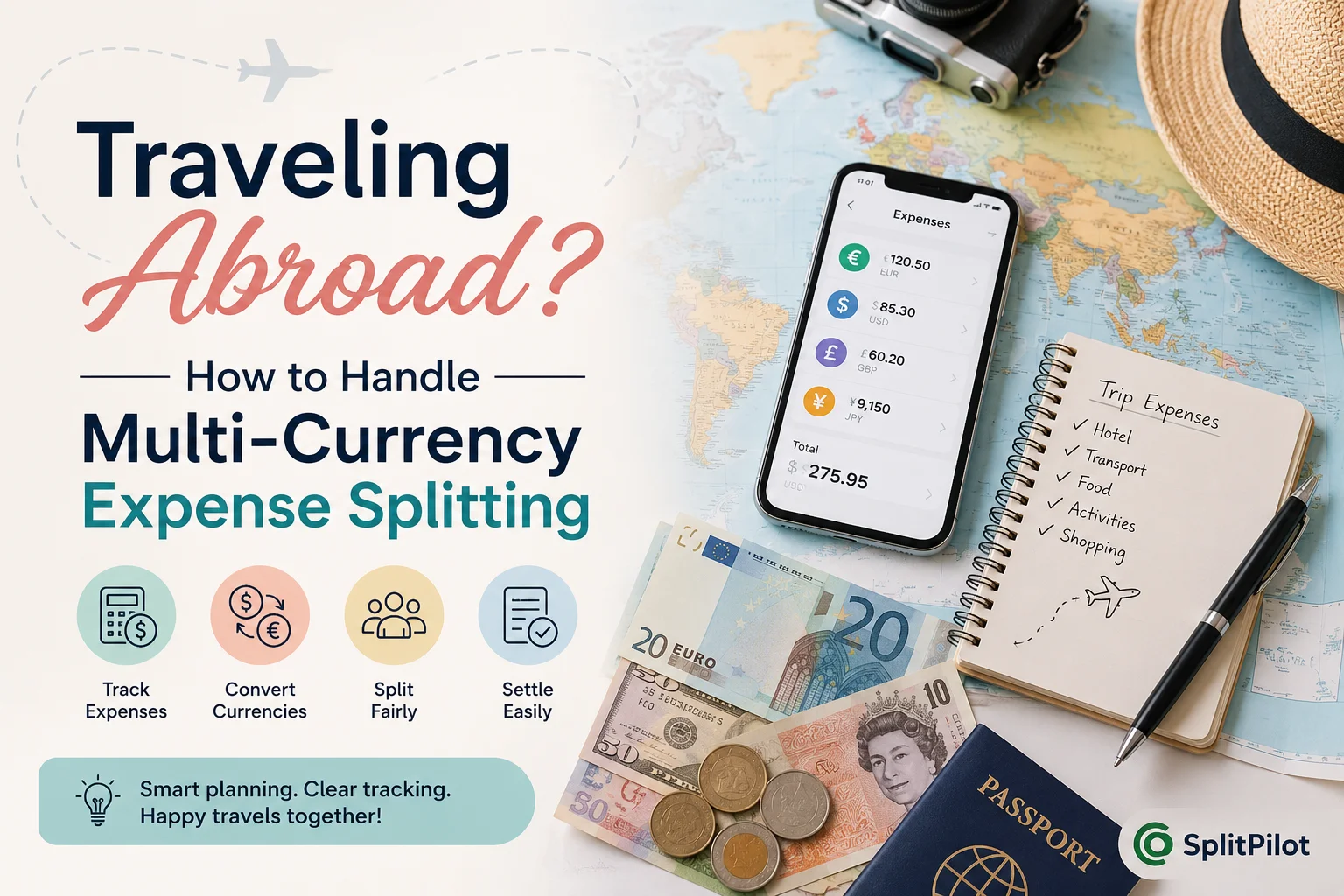
Traveling internationally with a group, family, or even a partner is an adventurous affair, but dealing with expenses involving various currencies can soon turn into a complicated affair. This is because it becomes hard to calculate how much each party should owe. However, by planning ahead and monitoring expenses, splitting expenses with various currencies becomes easy.
Why Multi-Currency Expense Splitting Can Be Difficult
During international trips, expenses are incurred in various currencies depending on what is being bought. For example, one individual might purchase food in euros, another will pay for accommodation in dollars, and another will incur expenses related to transport in local currency.
In the absence of proper expense tracking, participants will be faced with:
Calculation of various exchange rates
Uneven sharing of expenses
Payments that are forgotten
Exceeding the budget
Awkward monetary discussions
Select a Base Currency
Perhaps the simplest way to help facilitate a clearer group accounting process is to establish a base currency for the trip.
By having most of the travelers operate in dollars, for example, all expenses can be recorded in USD regardless of location.
Base currency will provide everyone involved with clear information about expenses without having to constantly switch currencies.
Record Group Expenses in Real Time
Post-trip calculations of the amount paid per traveler tend to result in many mistakes and miscommunications. Therefore, it is better to track expenses in real time and record the transaction directly after making payments.
Expenses to track include:
Costs related to accommodation
Spending on meals and snacks
Fees associated with transportation
Cost of activities
Shopping expenses
Miscellaneous costs
This approach helps to keep track of all expenses to prevent any miscalculations.
Currency Exchange Rates
Exchange rates fluctuate daily; therefore, using inconsistent exchange rates for calculations leads to discrepancies. It is best to keep track of currency exchange rates during the entire period of travel.
How to make an accounting fairer:
Use a consistent exchange rate reference
Apply the rate to convert the expense
Do not guess or estimate currency value
Check exchange rate often during the trip
Distinguish Between Shared and Individual Expenses
Not all travel-related expenses require equal distribution.
Common shared costs include:
Hotel accommodations
Travel costs
Joint meals
Entertainment and activities
Car rentals
Potential individual costs may include:
Souvenirs
Personal purchases
Private fun
Additional activities
The distinction will help you keep track of all your spending during the trip.
Consider Using Digital Wallets
Thanks to the development of modern money transfers, the process becomes more convenient. You no longer have to worry about exchange rates – many applications take care of it automatically. Besides, all transactions are recorded on your account.
Some benefits of using digital wallets include:
Efficient expense tracking
Prompt reimbursement
Decreased need for carrying cash
Accurate record of transactions
Increased accuracy of budgets
Having your transactions stored digitally also means that you do not have to keep records manually and will be able to track expenses after your vacation.
Multi-Currency Money Mistakes to Avoid
It is common for travelers to unintentionally create difficulties for themselves when planning finances abroad.
Mistakes often made include:
Not keeping track of small expenses
Using different exchange rates
Combining private and joint purchases
Overlooking foreign transaction costs
Delaying balance payments
These mistakes could cost you a lot of time and money.
Using Technology to Make Expense Sharing Easier
Manual management of expenses can become quite difficult especially when traveling abroad for an extended period of time. Expense sharing platforms allow travelers to calculate balances automatically, monitor payments, and conduct currency exchanges accurately.
Platforms such as SplitPilot make it easier for travelers to organize their expense sharing, handle multiple currencies, and know what everyone else is spending.
Final Thought
Multi-currency expense splitting does not have to be complicated. The traveler simply needs to decide on which base currency will be used and track all expenses, learn how to work with exchange rates and distinguish individual from collective expenses.
This will ensure that travelers do not get confused but instead concentrate on enjoying their trip.