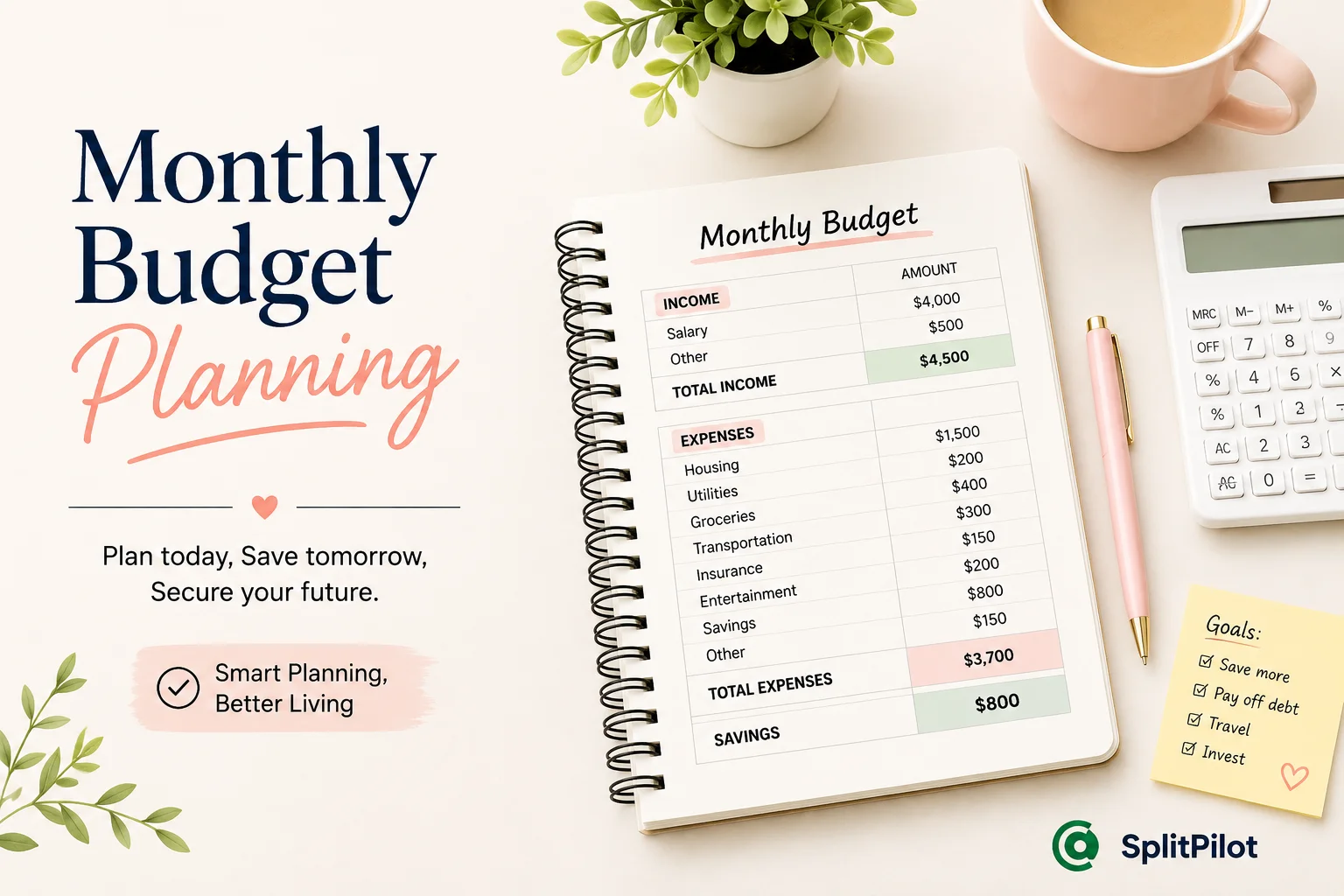
The idea of monthly budgeting is an outstanding method that makes it quite easy to handle finance and maintain financial stability. It would be challenging to save and regulate spending without any monthly budget. Furthermore, this type of budget allows people and families to obtain a better understanding of their finances.
It does not matter whether it is your personal or family budget; you always need to adhere to certain rules regarding budgeting and money monitoring. It is possible for every person to handle their finances more easily using budgeting methods.
Why It Is Necessary to Budget Your Monthly Finances
There is no one who does not spend a single rupee daily for some different reasons like paying for subscriptions, food, entertainment, shopping, etc.
Budgeting your finance will enable you to:
Track expenses and revenue
Spend money intelligently
Become a better saver
Prevent problems with debt
Achieve financial goals
Manage finance effectively
Calculate Your Monthly Income
When creating a budget plan, it is vital to understand one’s monthly income that comprises:
Income from a job
Income from freelancing
Income from a business
Additional income
Passive income
Understanding one’s total monthly income is essential in order to set realistic spending limits.
List Down Monthly Expenses
After calculating the total monthly income, the next thing to do is to list down all expenses which can be divided into two types:
Fixed expenses
This type of expenses occurs each month but stays almost the same each month.
Examples:
Rent or mortgage payments
Payment for utilities
Payment for internet access
Insurance payments
Loans repayment
Variable expenses
This type of expenses changes depending on how much one spends.
Examples:
Spending on food
Spending on shopping
Spending on entertainment
Transportation cost
Traveling cost
Listing fixed and variable expenses allows getting a full view of one’s monthly expenses.
Create Monthly Spending Limits
Setting limits for spending in each of the categories prevents overspending.
Examples of monthly budgets include:
Budget for food spending
Budget for entertainment spending
Budget for shopping
Travel budget
Save Money First
Among the key aspects of monthly budget planning is regular saving. People typically choose to accumulate money left at the end of each month; however, this technique does not always prove to be effective.
The best way is to see savings as a regular monthly expenditure.
The purpose of saving may be different:
emergency funds;
traveling;
investments;
repayment of debts;
future acquisitions.
Saving practices are critical for improving financial situation and readiness for any unforeseen spending.
Keep Track of Your Expenses
The process of budget planning can work effectively only when your expenses are monitored regularly. The practice helps to notice superfluous spending and prevent yourself from overspending.
Tracking expenses apps are useful since they allow you to:
note all daily expenditures;
categorize the expenses;
control your budget;
get monthly reports;
develop better habits.
Monthly Reviews and Adjustments of Your Budget
A monthly budget is supposed to be flexible because there is a lot of changes in finances and expenses on an ongoing basis. Thus, reviewing your budget monthly is essential.
The monthly review may help you:
identify spending patterns;
adjust limits of your spending;
improve your goals of savings;
eliminate unnecessary expenses.
Budgeting Pitfalls You Should Avoid
Some of the common pitfalls when creating a budget include:
Neglecting small expenses
Creating budgets that have been too optimistic
Neglecting to consider irregular expenses
Ignoring spending habits
Failure to review budgets frequently enough
Avoiding such pitfalls will go a long way in helping one make sound decisions when it comes to money matters.
Final Thoughts
The best strategy to have control of your financial matters is by having budgeting plans per month. One gets to track his or her income streams and also spend in a manner that guarantees savings each month.
Good budgeting practices will not only help one track spending, but also make sound financial decisions.