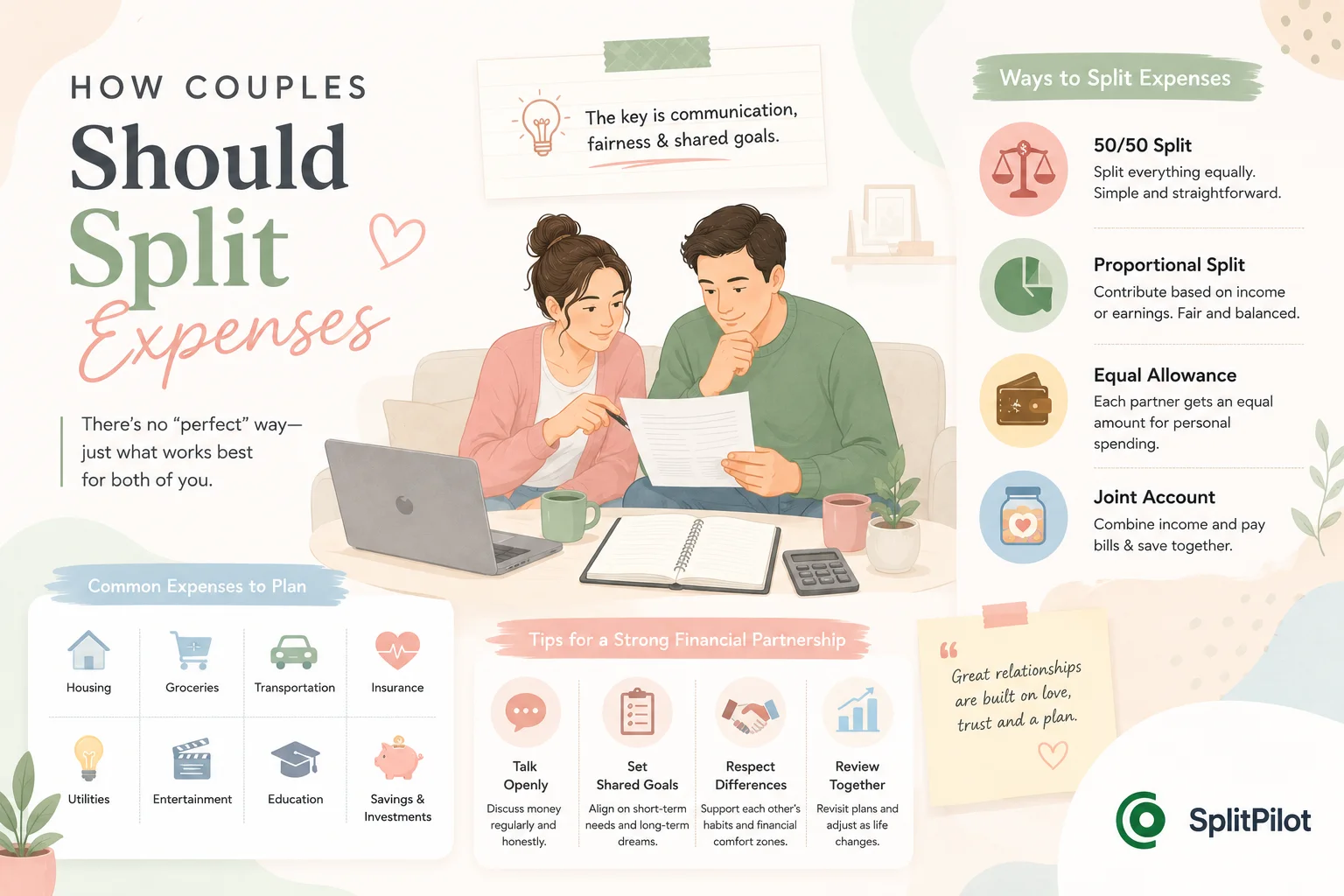
Financing is a complex process in any case, especially when it comes to shared spending management. Regardless whether you are still going steady or got engaged not so long ago, you must speak about finances and share expectations regarding how you perceive that aspect. Distribution of expenses is one of the questions that comes up often enough.
It might be difficult to give an unequivocal response here because each case is unique due to people having different incomes and lifestyles. But one thing for sure is that there is a need to have a decent communication and personal information exchange along with the ability to control expenses.
Why is it Important to Make a Financial Plan?
One of the main reasons people decide to separate is because of their misunderstandings. It happens quite often when there are different financial habits, distribution strategies, etc.
Benefits of Proper Money Management in Couples:
Trust between partners
Lack of arguments
Improved skills of managing money
Establishment of financial goals
Financial transparency
When you know everything about finance-related things, it is easier to make a decision.
Equal Splitting of Expenses
An option preferred by many couples is equal splitting of expenses. Here, both individuals will contribute an equal amount of 50% each towards expenses like rent, food, utility bills, subscription fees, or travel costs.
Equal splitting can be used successfully under conditions like:
Similar income level
Balanced spending habits
Equal usage of shared expenses
This is the easiest way to manage expenses since everyone pays an equal share.
But, equal splitting is sometimes perceived to be unfair where one person makes more money than the other.
Percentage Splitting of Expenses
Percentage splitting of expenses may be preferred by couples whose income differs by a great deal. Here, contributions to shared expenses vary depending on the income level of each individual.
For instance:
Partner A earns 60% of the total income
Partner B earns 40%
Splitting of expenses should be according to these percentages
Split Expenses According to the Frequency of Their Use
Some individuals like splitting their expenses according to the frequency at which one utilizes particular services. It works well with:
Personal subscriptions
Shopping costs
Personal hobbies
Costs of personal means of transportation
By splitting expenses according to usage, individuals remain independent financially but are able to manage common finances effectively.
Properly Track Common Expenses
The biggest mistake that individuals make regarding their common expenses is poor expense tracking. Even small expenses can add up without proper expense tracking.
Use of expense trackers will enable couples to do the following:
Track common expenses in real-time
Automatically split bills
Keep track of monthly expenses
Keep track of common saving plans
Keep financial records transparent
It becomes easier to keep track of common expenses by using expense tracker apps.
Open Communication Regarding Finances
Money-related issues are some of the most sensitive areas in any relationship. Therefore, one has to communicate freely about the following topics:
Expenses and spending habits
Personal financial plans
Monthly budget allocations
Common debts and payments
Common saving schemes
Financial Reviews
The financial reviews will help in ensuring the couples monitor their finances. Overspending will be avoided since the couple will examine their expenditures, savings, and even plan for their future budgets.
Couples will also identify unnecessary expenses through the financial reviews and hence improve their financial management in the coming days.
Final Thoughts
It is clear that there is no formula guiding the way couples split their expenses. But, perhaps the ideal strategy depends on various elements such as the level of income, the spending habits, and compatibility.
Equal distribution, percentages, or even usage-based can equally work if fairness reigns in the relationship.