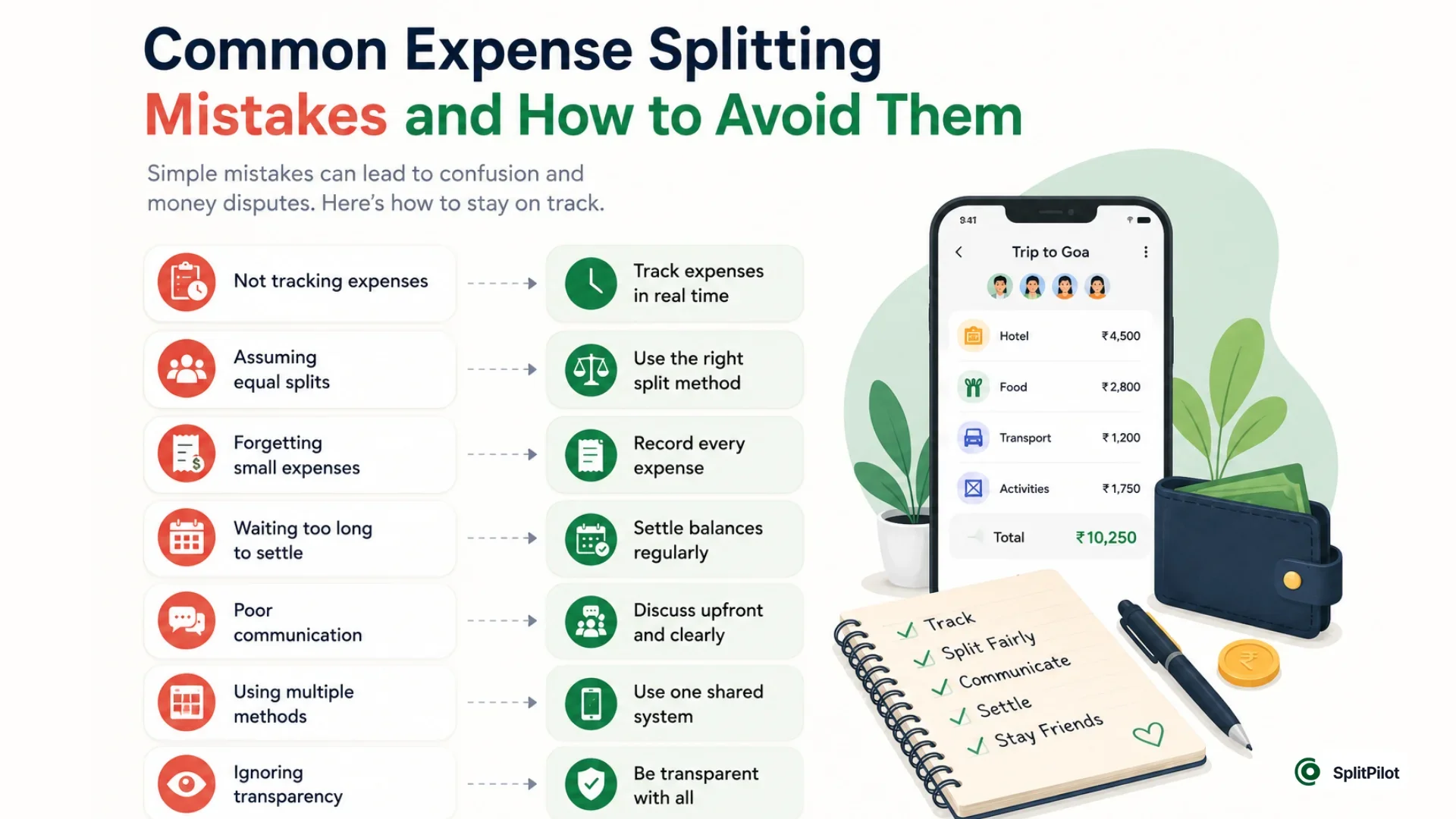
When you're traveling with friends, roommates, family, or a travel group, it can be easier to share bills, but often it can be complicated and stressful. Dividing bills may seem like an easy task, but it's easy for a few small errors to cause a conflict, forget to pay a bill or get some financial stress. If you avoid these common expense splitting errors you can avoid the problems and have an organized shared financial system.
Failing to immediately track expenses
1. Not recording expenses as they are made
People often make the error of only recording expenses at the end of a trip, at the end of a month or at the end of an event. Using memory can result in forgetting transactions and incorrect calculations.
How to avoid it:
Enter expense when they occur. From a restaurant bill to a grocery store to transportation, once the cost is added, there's not a moment to forget.
2. One of the two sides of an argument is incorrect
Many groups will split up all expenses evenly. This is not always a fair exchange when contributions are not equal or services are not used equally.
For instance, one roommate might consume more utilities, or one traveler might not engage in some activities because they believe it consumes too much electricity.
How to avoid it:
Select the splitting method which is most appropriate in the case. An equitable split or proportionate split or a split by items can all yield more equitable results depending on the circumstances.
3. Forgetting Small Expenses
It is easy to forget about some of the smaller purchases made such as snacks, parking fees, or communal subscription fees.
These minor charges can really add up over time.
How to avoid it:
Record all common costs, big or small. Regular tracking will avoid discrepancies and help to arrive at correct final results.
4. Delaying the settlement of balances
Many groups delay the payments for weeks or even months. The longer balances are outstanding, the more difficult it is to keep track.
Lack of settlements can also lead to uncomfortable dialogues and tensions.
How to avoid it:
Settle balances regularly. Settlements weekly or monthly are easy to manage and avoid confusion.
5. Poor Communication
One difficulty that may arise is the lack of communication about expectations before they occur. Individuals might have various ideas about what expenses to cover and what to cover, resulting in disagreements later.
How to avoid it:
Before expenses start, talk about how to cover them. Ensure that costs are split and repayment dates are agreed upon.
Multiple Tracking Methods are used to monitor student progress.
Some group members use spreadsheets, some use notes apps and some have to remember. This is an uneven approach and can lead to inconsistencies.
How to avoid it:
Have one system for tracking community bills. With a single source of truth, everyone's on the same page and it's easier to keep the books balanced.
6. Ignoring Transparency
If participants are not able to see expense records, they can ask questions about the calculations or repayment requests.
Trust in a group can easily be hurt if there is no transparency.
How to avoid it:
Select a method that ensures everyone can see the expenses, balances and payment history. The trust in the process is enhanced by transparency.
Conclusion
Expense splitting can be as simple as possible. Poor tracking of sales, delayed payments, poor communication, and lack of consistency in record keeping are the root causes of most issues. Making sure you record your expenses promptly, select the right split, be transparent and settle balances regularly, can help you prevent the common pitfalls and ensure that shared finances are stress-free. Using a dedicated expense-sharing tool like SplitPilot can further simplify the process by helping groups track expenses, calculate balances, and manage repayments in one place.A good expense management tool ensures that everyone is organized, accountable, and focused on having fun and not worrying about expenses.