Since two or more people generally decide to share a home, no matter the shape or arrangement, they end up in those everyday situations where expense sharing becomes a bit of a thing. It might be with a partner, a friend , family member or even a business colleague, so basically anyone you’re living around.
The bigger issue is whether those costs should be split equally, meaning everyone deals with the same share of the overall total, or split proportionately, meaning it’s tied to what each person can actually put in. Both ways sound fair in their own way, but they bring advantages and disadvantages depending on someone’s financial circumstances, and that’s usually where the friction starts.
So understanding these different ways of dividing expenses can genuinely help when it comes to clearing up any sort of money dispute.
What is Equal Expense Sharing ?
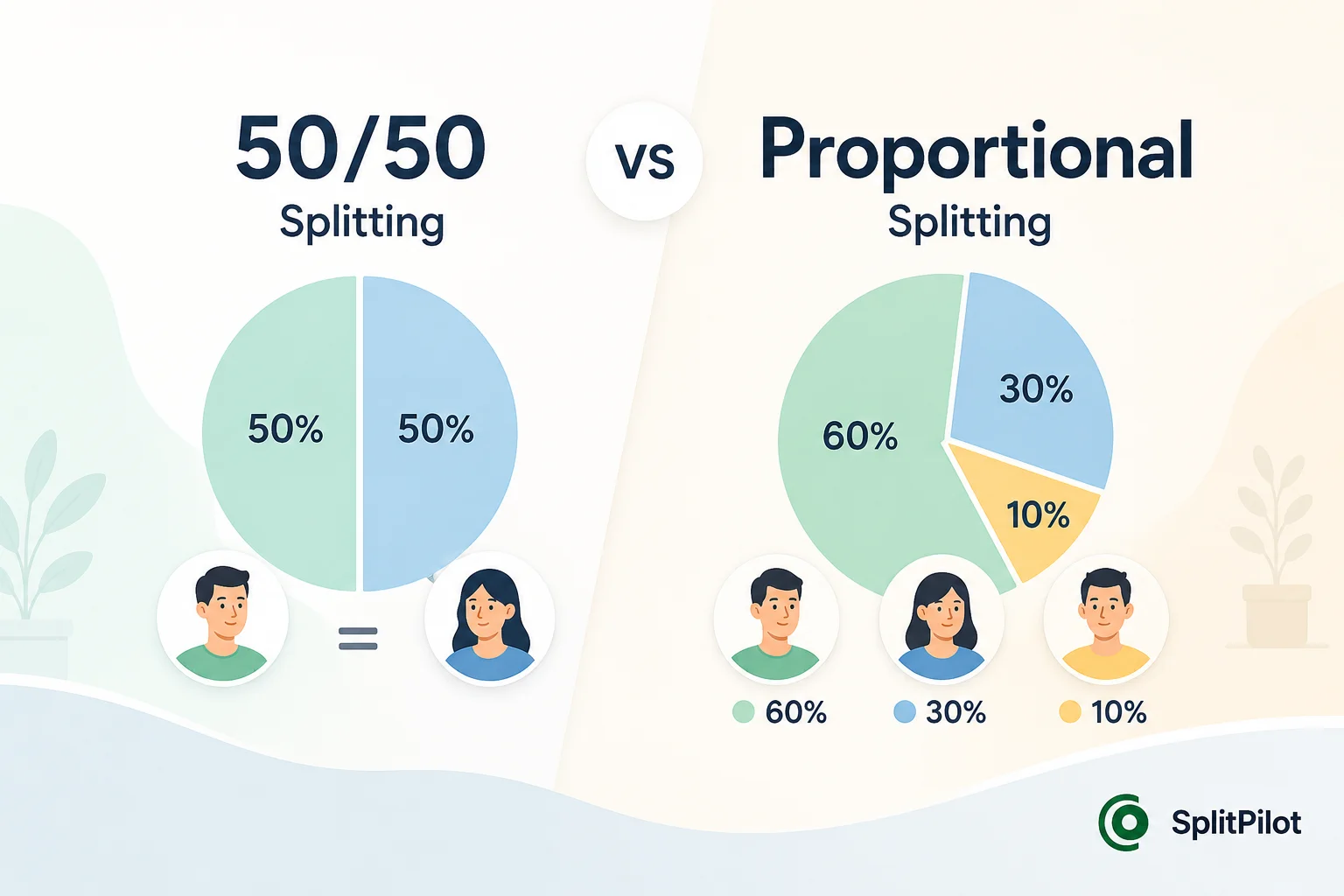
Equal expense sharing is the approach where all costs are divided the same, so each person covers the full amount of what was incurred, but in equal parts. In other words, everyone ends up paying an identical share of the total. This is, honestly, the most common method people use. For example :
Rent: 20,000 rupees
A : 10,000 rupees
B : 10,000 rupees
Equal expense sharing can also be used for grocery expenses, monthly subscriptions, transport costs, utilities, and other bills etc, depending on how you set up the agreement in the first place.
Pros of Equal Splitting
There are a few good things about splitting expenses equally, like it can be kinda straightforward, you dont have to overthink it , calculations stay simple, and it makes budgeting feel easier too.
Also it gives both sides some kind of shared responsibility, and payments usually become easy to manage. so , in general, equal splitting works best when both people have roughly the same income and expenses, kinda like everyone is starting from the same level.
Disadvantages of the Equal Splitting Method
Of course, the equal splitting method is simple, but it can sometimes feel uncomfortable. Especially if incomes aren’t balanced. For example:
One of the couple earns ₹30,000 per month
Second earns ₹1,00,000 per month
Even though the payment amounts end up equal , the person earning less might still feel the impact more strongly. because the money coming out of their budget is the same, just proportionally it hits harder.
What Does “Proportional Splitting” Mean?
“Proportional splitting” means you split expenses using percentages, not dividing everything into equal parts. In other words , the split follows a ratio. Example:
Total combined earnings ₹1,50,000
One of the partners earns 70%
The second partner earns 30%
Then the expenses are divided in the same ratio as the salaries.
This approach is often viewed as more fair, especially for roommates or couples where financial power is different, or when one person naturally has more capacity than the other.
Advantages of proportional expense sharing
There are quite a few advantages to this proportional expense sharing system, and honestly it tends to feel more real to most couples:
Financially fairer
Doesn’t put much pressure on lower earners
Helps keep a sensible lifestyle balance
Supports better long-term financial comfort
Most couples end up preferring the proportional splitting system, because it lets them cover their part without feeling squeezed or, you know, stuck to one rigid method.
Drawbacks of proportional division
Still, even if it’s “fair”, proportional division can get a little more complicated… the math depends on income that keeps shifting and on set percentage rules, so it’s not always as quick.
Things to consider as potential obstacles:
Complicated calculations
Regular changes in income
Subjective considerations of what feels fair
Harder manual calculation of contributions
Expense tracking applications can make this smoother, and they usually improve transparency too, so the numbers aren’t only “in someone’s head”.
Unfortunately, there really aren’t clear, final answers here, since every financial situation is different. The system you choose depends on factors like:
Income inequality
Expenditure level
Shared financial priorities
Personal preferences
Spending style
Both partners have similar incomes
Shared expenses are fairly balanced
You prefer quick easy division of expenses
You want equal distribution of responsibilities
- There is a bigger income gap between partners
- One partner has greater financial obligations
- There is a desire to share expenses in an even way
- You need long-term budget planning
Significance of Effective Communication
Regardless of the methodology adopted, it is significant to have effective communication in order to facilitate proper cost sharing. This includes conversations on:
Budgeting per month
Spendings plans
Financial savings
Duties
This way, conflicts can be avoided and finances managed effectively.
Final Thoughts
The 50/50 cost sharing method and the proportional cost sharing have advantages based on the conditions of each person. The 50/50 method is simple while the proportional method will create financial equity between individuals with different earning capabilities.